

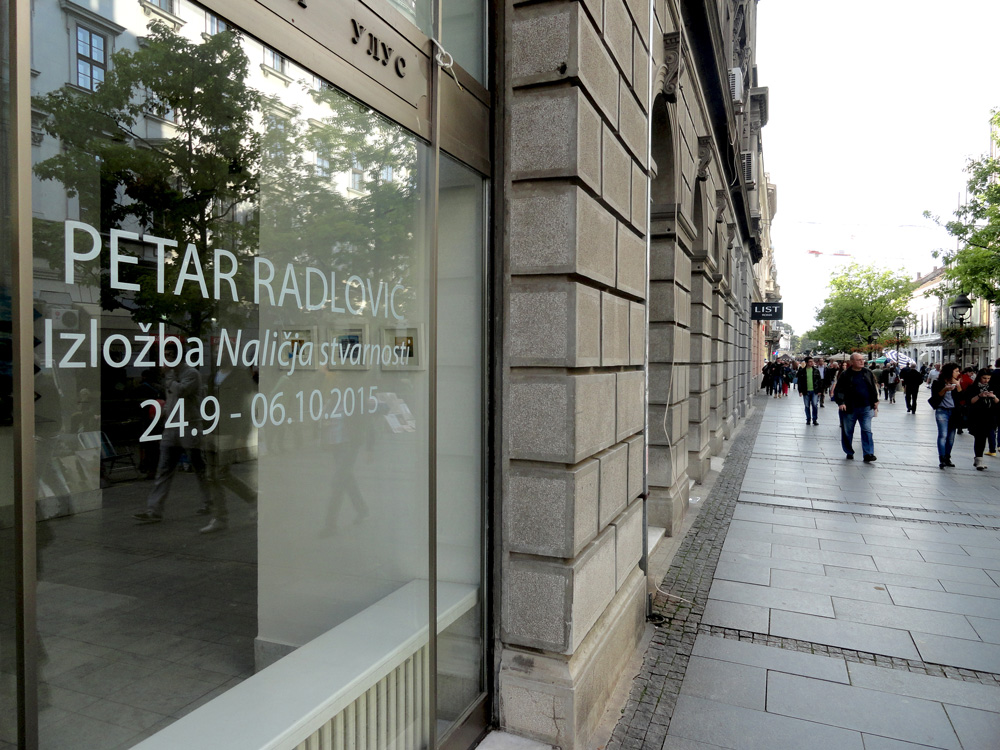
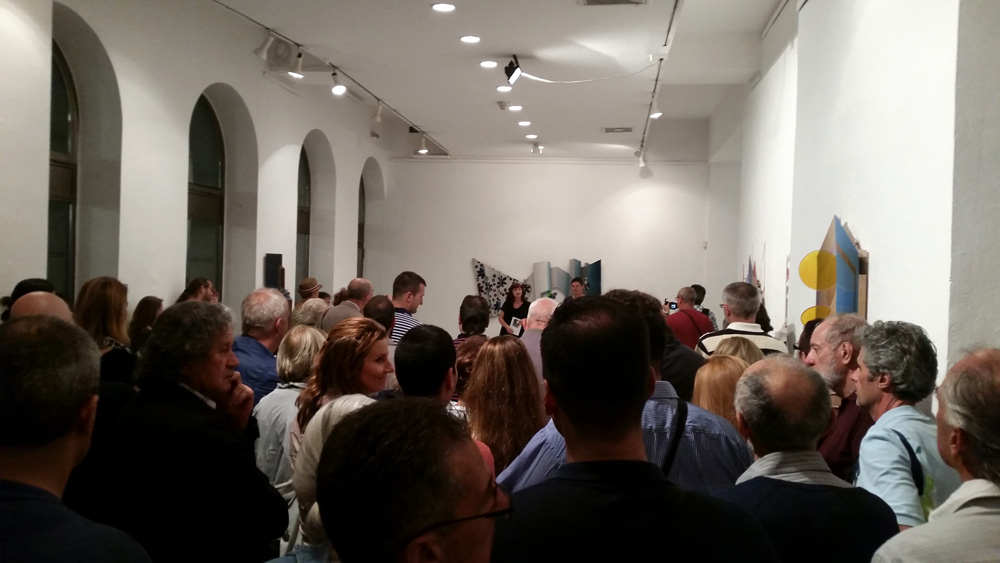
2015 Naličja stvarnosti ULUS
Petar Radlović’s Art: Two Decades of Expression
Petar Radlović’s art can be traced back to the mid-nineties, when he began his exhibiting activity. The genesis of his artistic manuscripts, spanning two decades, has been continuous, and his explorations into new expressive fields are a clear sign of creative vitality. The common denominator of his previous oeuvre is a researchable sensibility which, combined with a creative curiosity, establishes a visual physiognomy that today carries the weight of mature expression.
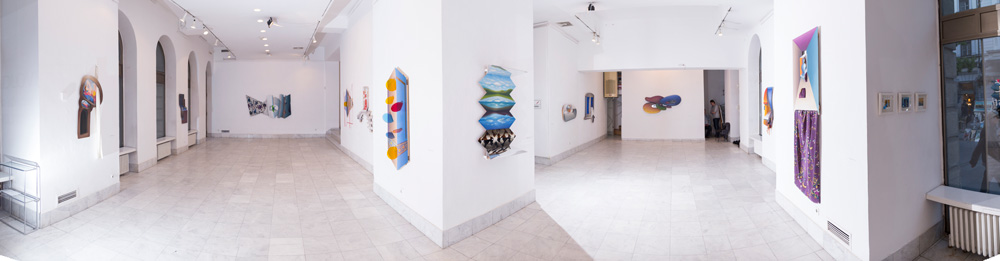
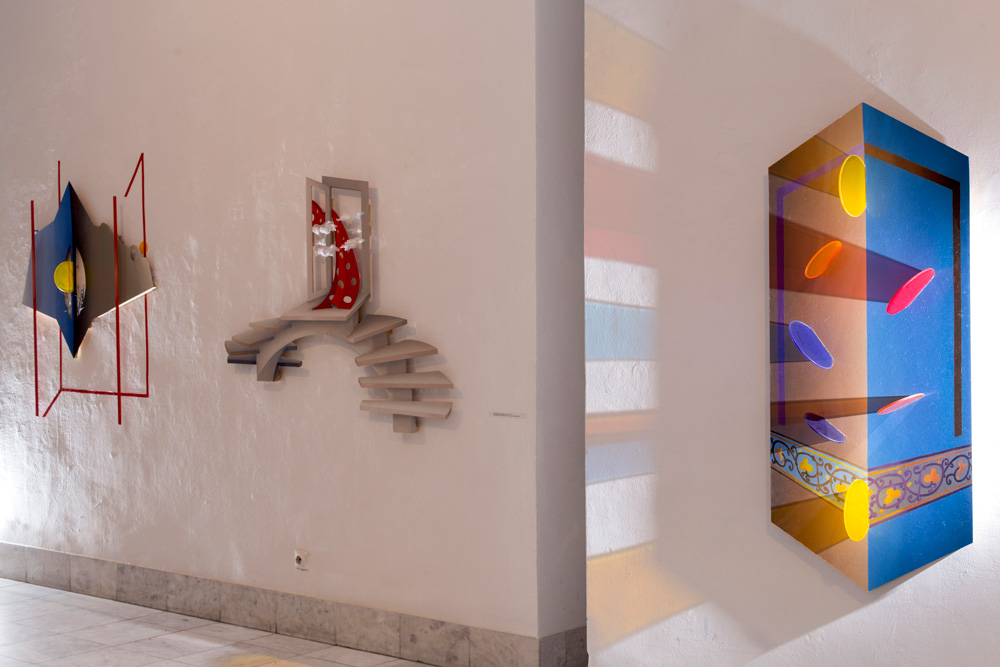
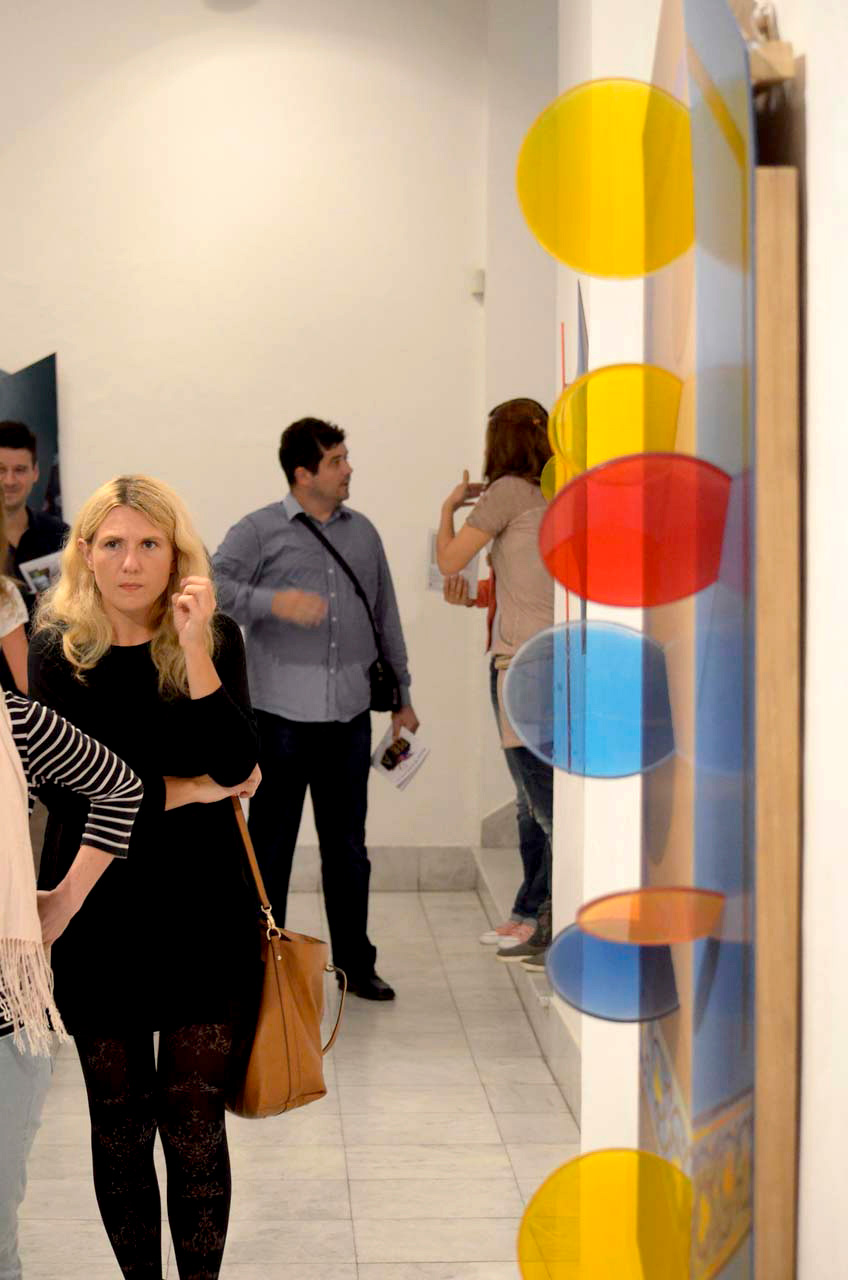
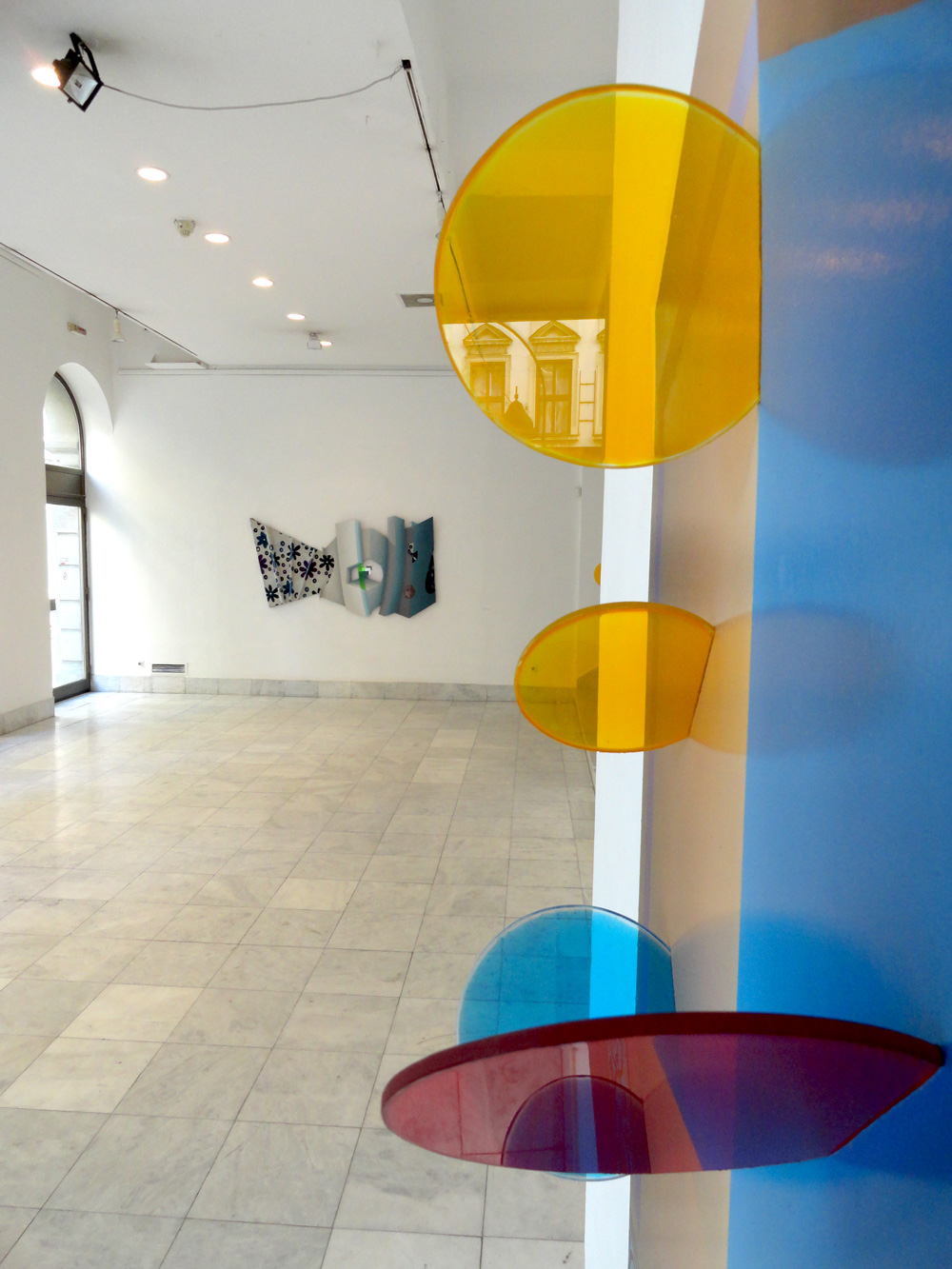
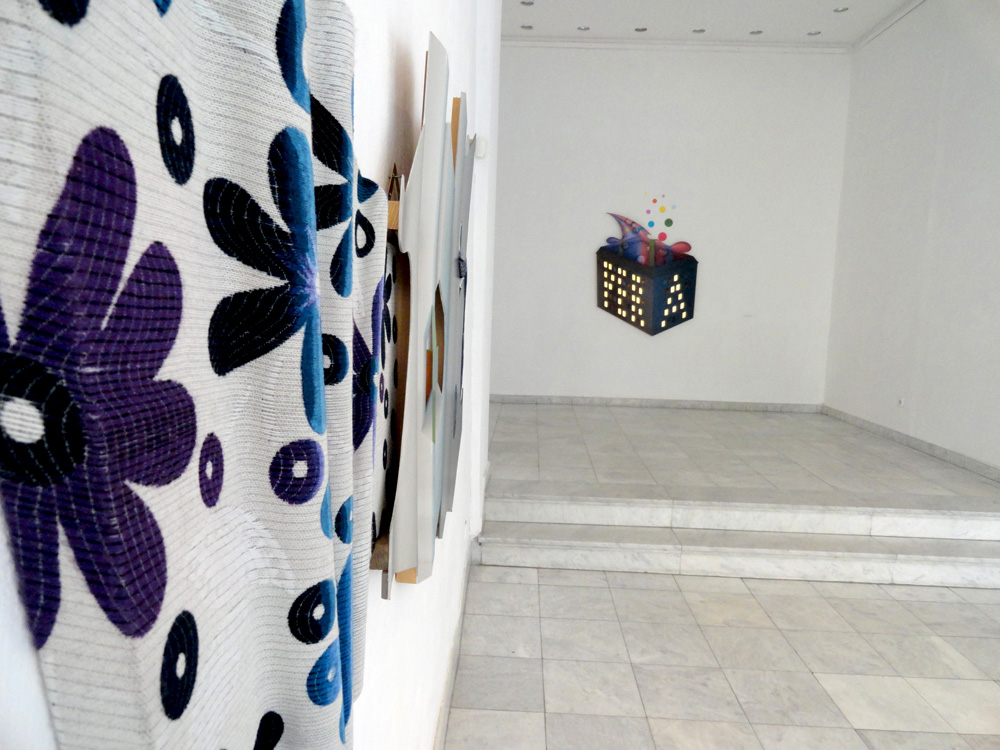
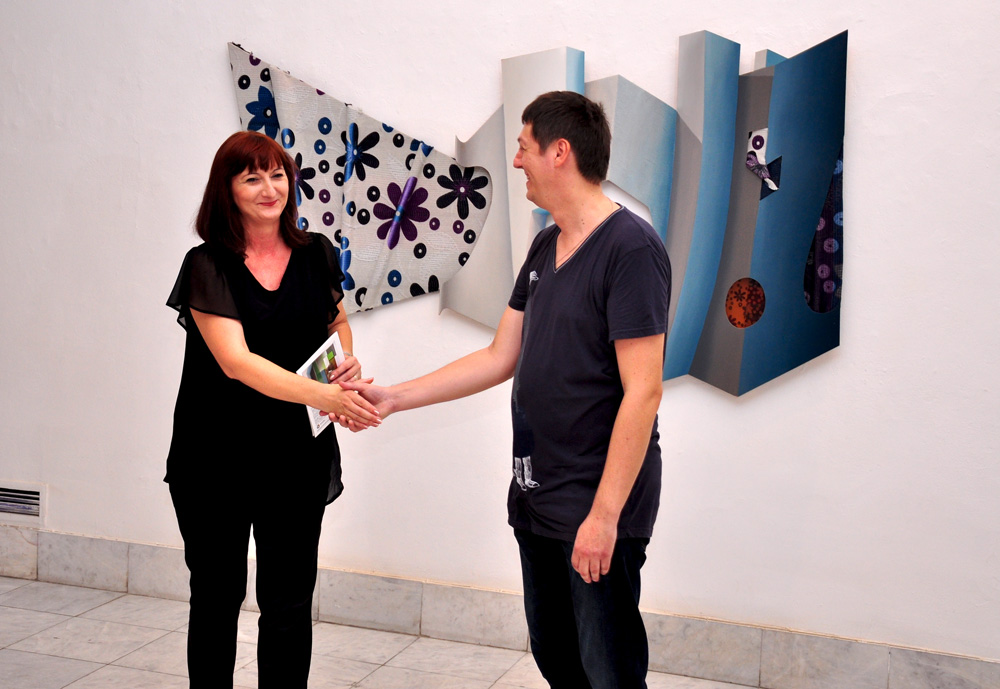
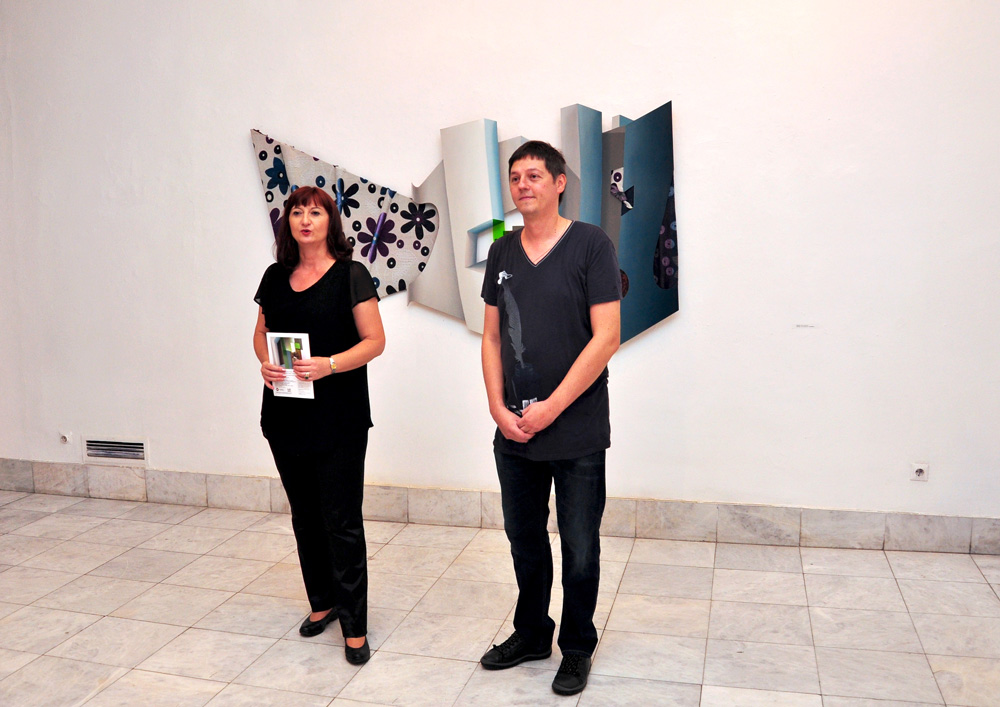
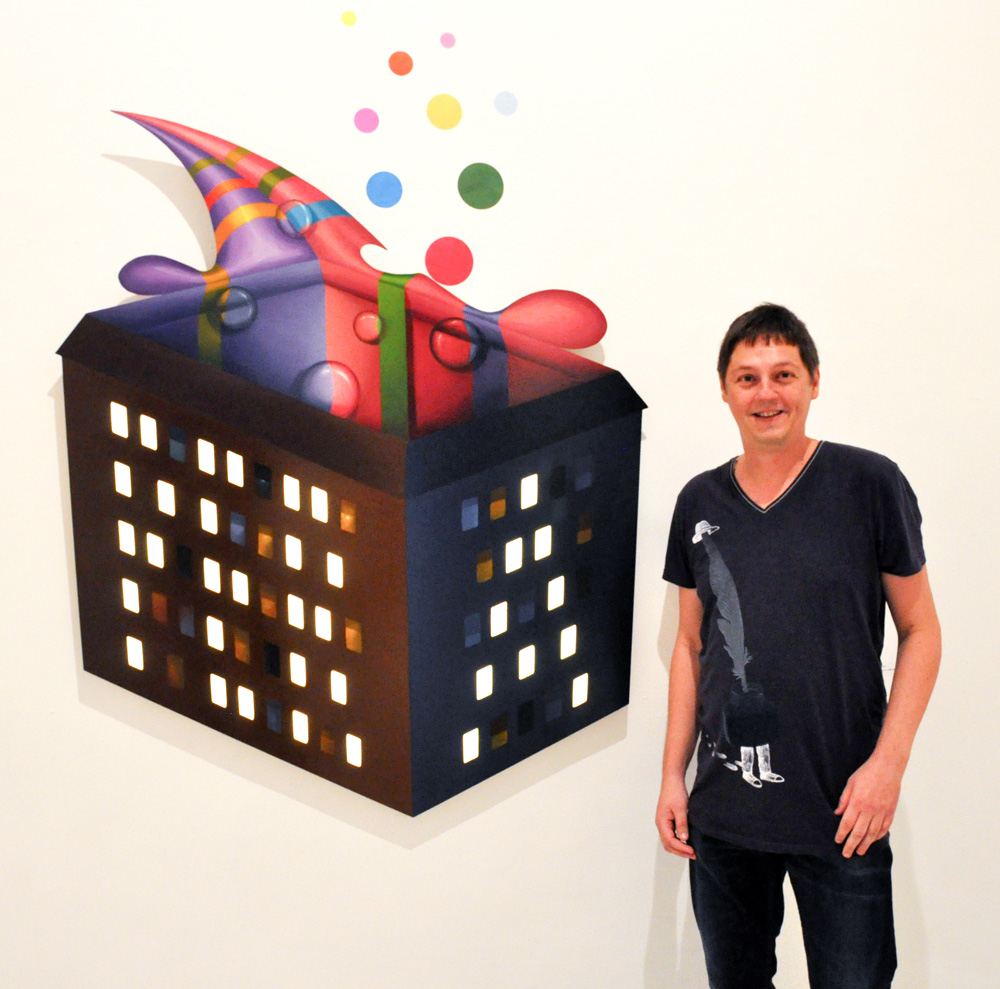
The exhibition at ULUS Gallery consists of painting-objects in which the artist presents his latest reflections. In these visual testimonies, the author identifies closely with his work. This personal attitude, visible in all aspects of the pieces, reveals him as a studious devotee to the vocation of painting. Everything begins with an idea, but for Radlović it is more than that: the idea is the foundation for a mental image that gradually develops and experiences its materialization in a delicate process of realization. Through precise shaping of hardboard and cardboard, their combination, and other interventions, the artist creates objects that, through the painting process, become embodied ideas. The complex approach in seemingly simple compositions is a causal process, which, as such, possesses a rounded fullness. Radlović is an artist who enjoys painting, analyzing image-objects, composing them, and organizing surfaces, building layered visual stories in which every segment has a strong artistic foundation.
His distinctive style is based on the perception of everyday life and its transposition into poetic-pictorial metaphors that transcend reality. Objects of generally accepted meaning, which also carry a personal imprint, become part of a new reality in which the continuum of space and time governs. In such an achieved atmosphere, physical space gains characteristics of absoluteness, and time acquires a dimension of infinite sequence.
As a symbol of the present, past, or any other moment, this leads to a dynamic organization of forms, intersections, and overlapping of painted and other surfaces. The overall chronological context of the works is established through objects recognized as part of the aesthetics of a given era. The architecture of the work relies on color-intonated drawings and a coordinated relationship of horizontals and verticals, which establish balance. Depending on the wall or background where the piece is placed, it becomes an active or passive factor in perception.
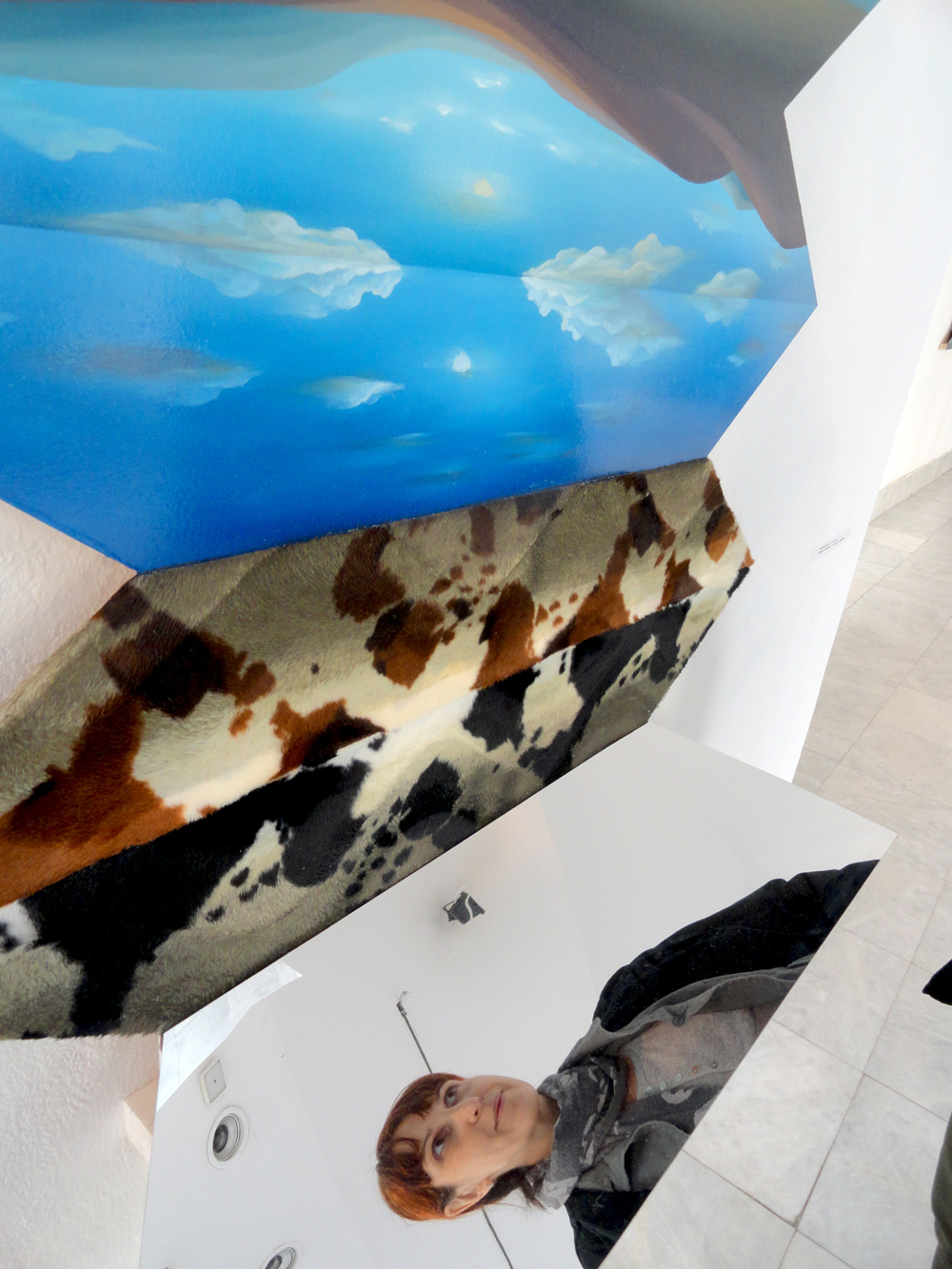
By painting on a limited flat surface, the artist creates space in which the compositions build a scene that gains an additional dimension when objects physically extend from the picture. This dimension is further emphasized in some pieces (e.g., Euphoria) by painting the reverse side of the work, with optical illusions producing the emergence of new contexts. The mutual relation of elements, their importance in the given order, and the often-present drapery, fluttering like a light breeze, evoke the inevitable flow and transience as the only truth. Its figurative meaning is emphasized, along with the artistic properties that complement the visual whole.
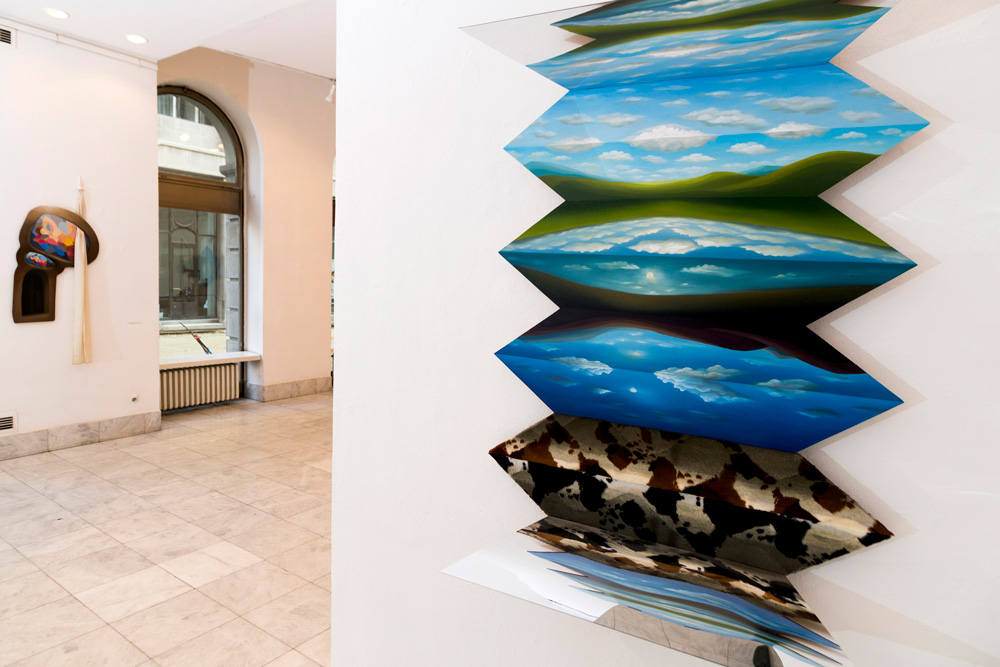
The compositions are generally made up of a few reduced geometric forms, which, if monochromatic, build a tonal gradation spectrum. Conversely, some works feature individual elements with a distinct motif, each forming a variable series that concludes with areas of non-painterly materials, representing a logical sequence of visual events (Mountain Landscape).
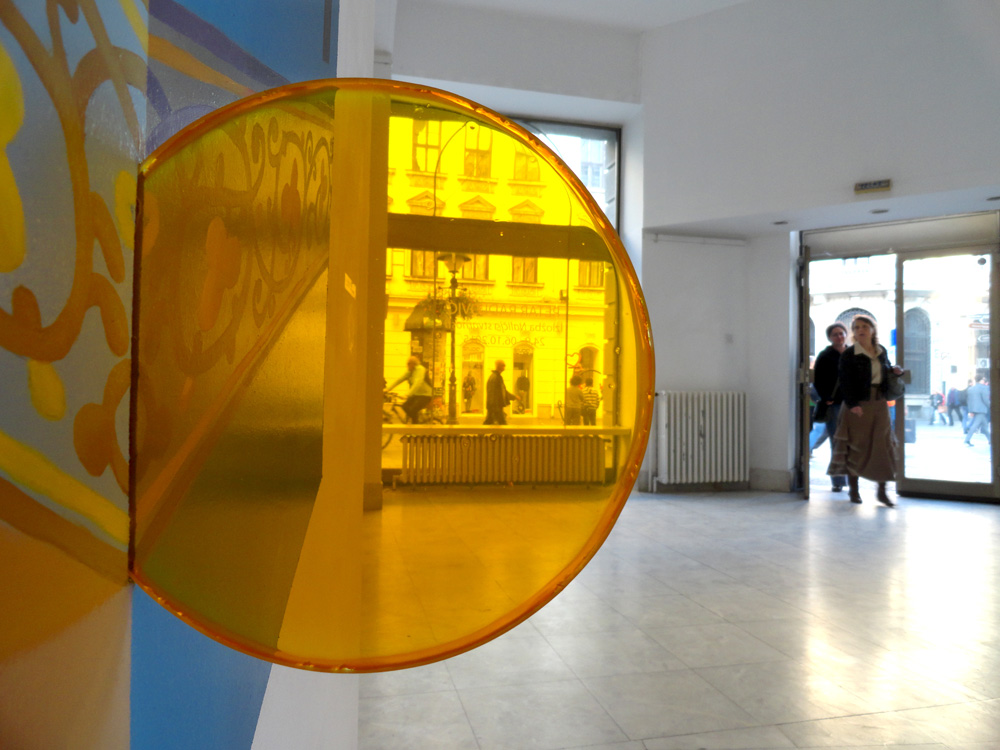
Through careful analysis, Radlović selects artifacts that have become such a semantically and artistically inseparable part of the whole that, unless deliberately highlighted, they do not stand out from the painted sections. Coffee cups, marbles, a snail, mirrors are among the objects included. Their visual presence and the allusions they create point to the artist’s emotions and memories, which, in relation to the observer, evoke similar associations. Titles such as Space, Someone I Used to Know, Spring, Morning Crossword, and others refer to the environment from which the initial impulse emerged. Fluttering floral draperies, mirrors as reflections of projected reality, and other objects fully bring Radlović’s vision to life.
A carefully selected color register, its complementarity, and tonal values contribute to the overall impression of the exhibited image-objects, revealing a fragment of the artist’s inner world. Another question arises: what are the elusive moments in life, both real and spiritual, that permeate each individual piece?
Olivera Vukotić
Petar Radlović’s Art: A Retrospective Perspective
Petar Radlović’s art can be traced back to the mid-nineties when he started exhibiting. The genesis of his artistic manuscripts that spans two decades is continuous, and his engagement in new expressive fields shows a sign of creative vitality. The common denominator of his previous oeuvre is a researchable sensibility that, together with a creative aim for questioning, forms a visual appearance which now has the weight of mature expression.
The exhibition at ULUS Gallery includes paintings-objects in which the artist presents his latest reflections. The artist identifies with his work in these visual testimonies. That personal attitude, evident in all aspects of the exhibits, reveals a studious devotee to the artist’s vocation. Everything starts from an idea, but for Radlović it is more than that; the idea is a foundation for a mental image that gradually builds up and experiences its materialization in a delicate process of realization. With precise shaping, combining, and other interventions with hardboard and cardboard, the artist creates objects which, in the painting process, become embodied ideas. The complex approach in the seemingly simple compositions is a causal relationship, which as such has a rounded fullness. Radlović is an artist who enjoys painting, analyzing image-objects, composing them, and organizing space, building layered visual stories in which every segment has a fine visual art foundation.
His distinctive style is based on the perception of everyday life and its transposition into poetic-pictorial metaphors that transcend reality. Items with generally accepted meanings, which also possess a personal touch, become part of a new reality in which the continuum of space and time rules. In such an achieved atmosphere, physical space obtains characteristics of absoluteness, and time gains a dimension of infinite sequence.
As a symbol of the present, past, or any other moment, this results in a dynamic organization of forms, interferences, and overlapping of painted and other surfaces. The pieces gain a general chronology by using items recognized as part of the aesthetics of a given time. The structure of the exhibits is based on colorful drawings and a coordinated relationship of horizontals and verticals, which establish balance. Depending on the wall or background in which the piece will be placed, it becomes an active or passive factor in perception.
By coloring a flat limited surface, the artist paints space where drawings build a scene that gains another dimension through the physical release of objects from the image. That dimension is further accentuated in some exhibits (e.g., Euphoria) by painting the reverse side of the piece, and the optical illusion creates an incidence of new contexts. The mutual relation of elements, their importance in the given order of things, and draperies that often flutter like a light breeze bring to mind the inevitable flow and transience as the only truth. Its figurative meaning is emphasized, as are the artistic properties that complement the visual entity.
The compositions are mainly comprised of a few reduced geometric forms that, if monochrome, build a gradation spectrum in the tonality of one color. On the other hand, some pieces feature elements with a motivic idea, each having a substantially variable series that finishes with fields of non-painterly materials representing a logical sequence of visual events (Mountain Landscape).
With careful analysis, Radlović selects artifacts that have become a semantically and artistically inseparable part of the whole, which, unless deliberately highlighted, do not stand out in relation to the painted parts. Coffee cups, marbles, a snail, mirrors are some of the items in the apparatus. Their visuality and the allusions they create point to the artist’s emotions and memories, which, in relation to the observer, bring to mind similar associations. The titles Space, Someone I Used to Know, Spring, Morning, Crossword Puzzles, and others refer to the environment from which the initial impulse came. Fluttering floral draperies, mirrors as reflections of a projected reality, and other items fully bring Radlović’s vision to life.
A sophisticatedly selected color register, its complementarity, and tonal values contribute to the general impression of the exhibited image-objects, exposing an excerpt of the artist’s inner world. Another question arises: what are the elusive moments in life, real and spiritual, that permeate each individual piece?
Olivera Vukotić